SCADA Upgrade Catches Critical Failover Defect Before It Reaches Production
A like-for-like platform and OPC driver upgrade at GWW Sunbury — engineered to bring the site into line with GWW's other Western sites, and rigorously tested to uncover a latent tag-activation defect in the server redundancy layer before it could affect a live failover.
Project Overview
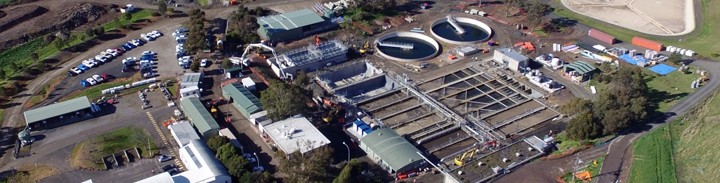
Greater Western Water (GWW) engaged Parasyn to upgrade the SCADA platform at its Sunbury site. The site's existing Citect SCADA servers were running an older operating system and software version than the rest of GWW's Western site portfolio, creating an inconsistency in platform baseline, support posture, and long-term maintainability.
The engagement scope was to upgrade the Sunbury Citect machines to Windows Server 2022 and AVEVA Plant SCADA (Citect) 2018 R2, Update 32 — bringing the site's software stack into alignment with GWW's other Western sites — and to replace the site's legacy KEPServerEX OPC driver with a direct GE driver, migrating all 11,423 existing SCADA tags onto the new driver.
Technical Scope & Requirements
The scope combined platform standardisation with an OPC driver replacement — two changes that interact at the server redundancy layer and required careful sequencing to avoid compounding risk.
The Challenge — A Hidden Failover Defect
Because the OPC driver replacement touched the mechanism by which the primary and standby Citect servers exchange live tag data, Parasyn treated it as a contractual Hold Point — meaning full development work would not proceed until a proof-of-concept confirmed the new driver behaved correctly under redundancy, not just in normal single-server operation.
The Parasyn Solution
Left unresolved, the defect meant that a real primary-server failure at Sunbury could leave close to two-thirds of SCADA tags dark on the promoted standby server — a significant loss of operator visibility during exactly the event that redundancy exists to protect against. Because the issue surfaced during Parasyn's own validation testing rather than in production, GWW raised it as a dedicated investigation and rectification work package, resolved ahead of final go-live.
Implementation & Cutover Methodology
- PreparationRequirements finalisation, collection of comms drivers and data files, and stand-up of an offline development environment matching the target GWW server build.
- DevelopmentSoftware and licence installation, comms driver configuration, GE OPC driver installation and tag conversion, and development of the GWW Run Sheet and test documentation.
- Testing — FATOffline testing of the upgraded project on the development server, comms driver testing, and configuration/tag health checks on the two new GWW-supplied servers ahead of shipment to site.
- Cutover — SATSite-specific induction, installation and data copy to the new servers, parallel running of old and new servers, and Run Sheet-governed Site Acceptance Testing.
- CompletionResolution of remaining defects, completion of the testing Run Sheet, and formal project sign-off — with an allowance retained for post-implementation support.
Project Outcomes
As at the August 2026 reporting period, the Sunbury upgrade is in its final stages of issue resolution.
Standards & Frameworks Applied
Lessons Learned & Future Recommendations
| Insight | Impact & Context | Recommendation |
|---|---|---|
| Test Every Failover State Explicitly | Steady-state operation testing alone does not prove redundancy. | Include primary failure and standby cold-start scenarios as mandatory test cases in every SCADA SAT plan. |
| Treat Driver Replacements as Hold Points | Gating the OPC driver swap behind a proof-of-concept caught the defect early enough to resolve it without derailing the schedule. | Define OPC or comms driver replacements as contractual Hold Points in every project that touches the redundancy layer. |
| Document Validated OPC Parameters for Reuse | The validated OPC redundancy parameters are a reusable reference for future GWW Western site standardisation work. | Maintain a validated OPC parameter library by site and driver type, updated at project close-out. |
| Budget for Out-of-Scope Discovery | A defined discovery allowance kept the additional tag-discrepancy investigation contained and schedule-visible. | Include a scoped discovery allowance with a timeout trigger in every upgrade engagement that touches a comms driver. |
Site